Introduction
Digital marketing in 2026 is less about chasing trends and more about building clarity, trust and consistency. Audiences are more selective, attention spans are shorter, and organisations are expected to communicate clearly across every channel they use.
For UK businesses and education providers, digital marketing now needs to work as a joined-up system. Websites, content, search, social media and even print all play a role in shaping how your organisation is perceived and whether someone chooses to get in touch.
This guide explains, in plain English, what digital marketing really means in 2026, what has changed, and how to build a practical approach that delivers long-term value rather than short bursts of activity.
What is digital marketing in 2026?
Digital marketing is the use of online channels to communicate your message, promote your services and encourage people to take action. In 2026, it is no longer about isolated tactics. It is about how everything connects.
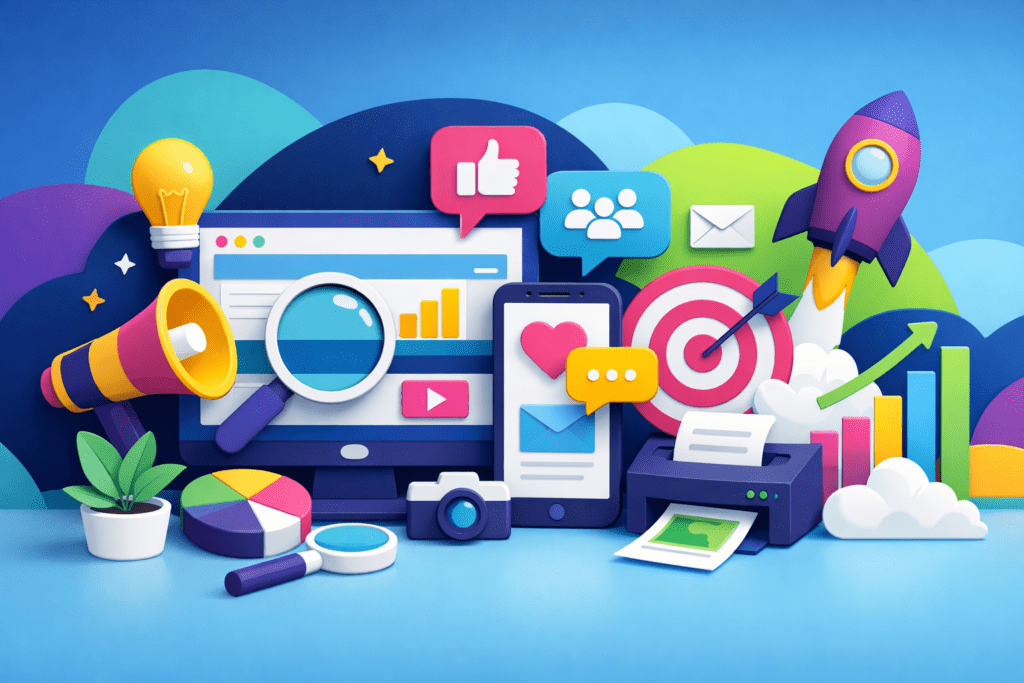
A strong digital marketing setup typically includes:
- A clear brand and message
- A website that explains what you do and who you help
- Content that answers real questions
- Ongoing visibility through search and social
- Measurement that shows what is working
The biggest shift is integration. Digital works best when it supports, and is supported by, creative thinking and offline activity where relevant.
What has changed in recent years?
Audiences expect relevance
People are exposed to marketing all day, every day. As a result, they are quicker to ignore anything that feels generic or overly sales-focused. Messaging needs to be relevant, timely and genuinely useful.
Search engines reward clarity
Search engines now prioritise content that clearly answers questions. Pages that explain topics simply, include FAQs and are well structured tend to perform better than pages filled with vague marketing language.
Trust matters more than ever
Consistency across channels builds trust. If your website, social media and printed materials feel disconnected, confidence drops. A clear, professional presence reassures people they are dealing with a credible organisation.
The key building blocks of effective digital marketing
1. Start with a clear strategy
A digital marketing strategy defines what you are trying to achieve and how you will get there. Without this, activity becomes reactive and difficult to measure.
A good strategy answers four questions:
- Who are we trying to reach?
- What do we want them to do?
- Where do they spend their time?
- How will we measure success?
Benefit to you: A clear strategy saves time, avoids wasted spend and keeps everyone focused on the same goals.
2. Your website is the foundation
Your website is the central point for your digital marketing. Everything else should lead back to it.
In 2026, a good website should:
- Load quickly and work on all devices
- Use clear, plain English
- Explain your services without jargon
- Include clear calls to action
- Be easy to update and manage
Plain English definition:
Your website is your digital front door. If it is confusing or out of date, people will not come in.
3. Content that answers real questions
Content marketing is about being helpful. The most effective content addresses the questions people already have.
Examples include:
- Guides and explainers
- Frequently asked questions
- Step-by-step articles
- Case studies and examples
This type of content supports both users and search visibility.
Benefit to you: Helpful content builds trust before someone ever speaks to you.
4. Search engine optimisation explained simply
SEO helps your website appear when people search for relevant terms.
In 2026, good SEO focuses on:
- Clear page structure
- Natural use of keywords
- Question-based headings
- Internal links between related pages
- Regular updates
Quick explanation:
SEO is about making your website easy for both people and search engines to understand.
5. Paid advertising with a clear purpose
Paid media, such as pay-per-click advertising, still plays an important role. The difference is how it is used.
Rather than being always-on, paid advertising is often used to:
- Support specific campaigns
- Promote events or deadlines
- Test messaging quickly
When combined with strong landing pages, paid activity can be very effective.
6. Social media as support, not a distraction
Social media works best when it supports wider goals rather than trying to do everything.
A practical approach includes:
- Choosing the right platforms
- Posting consistently rather than frequently
- Sharing useful or relevant content
- Supporting campaigns and announcements
Benefit to you: Social media reinforces your message rather than competing with it.
Why integration matters
One of the most common problems organisations face is fragmentation. Creative, digital and print are often treated as separate activities.
An integrated approach ensures:
- Messaging stays consistent
- Creative ideas work across channels
- Digital performance informs future decisions
- Print supports digital activity where appropriate
Audience takeaway: Working with a single, integrated partner reduces complexity and improves results.
A simple step-by-step digital marketing plan
- Define your audience and objectives
- Review your website and key messages
- List the questions your audience asks most
- Create or update core content
- Choose supporting channels such as search and social
- Measure performance monthly
- Refine and improve over time
This approach supports long-term growth rather than one-off campaigns.
Quick answers and FAQs
What is the most important digital marketing focus in 2026?
Clear messaging and consistency across all channels.
Do we need to be active on every social platform?
No. Focus on the platforms your audience actually uses.
How long does SEO take to show results?
Typically three to six months, depending on competition and activity.
Is digital marketing suitable for education providers?
Yes. Clear content, trust and visibility are especially important in education.
Should digital and print work together?
Yes. Integrated campaigns are more memorable and effective.
Semantic keywords related to digital marketing in 2026
- Digital marketing strategy UK
- Integrated marketing services
- B2B digital marketing
- Education sector marketing
- SEO services UK
- Website design and build
- Retained marketing support