Working with local organisations always brings something extra to a project, but our recent collaboration with Hertfordshire Zoo was particularly special. Not just because the zoo is a short distance from our offices in Cuffley, but because it is a place many of us have visited with our own families over the years.
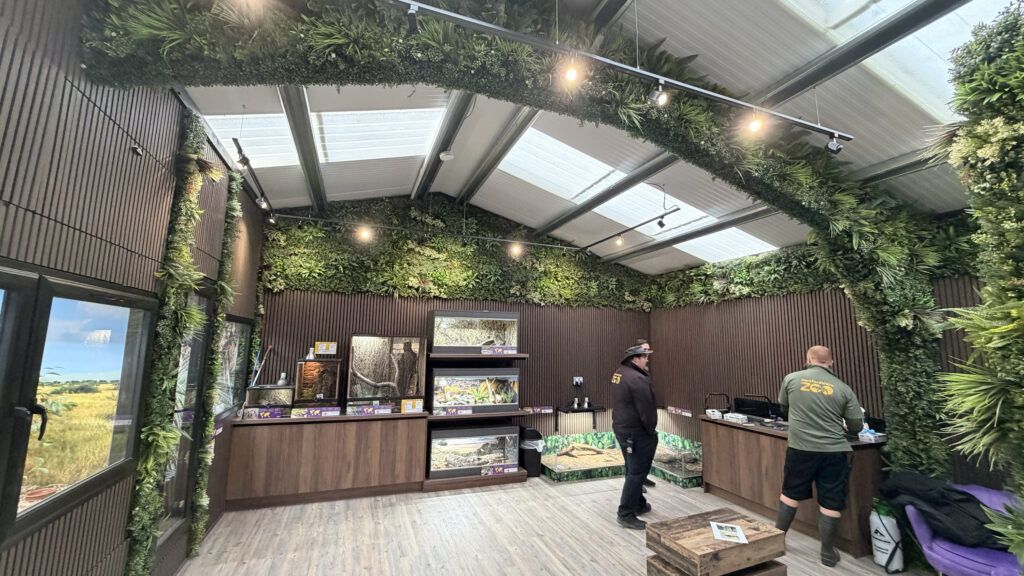
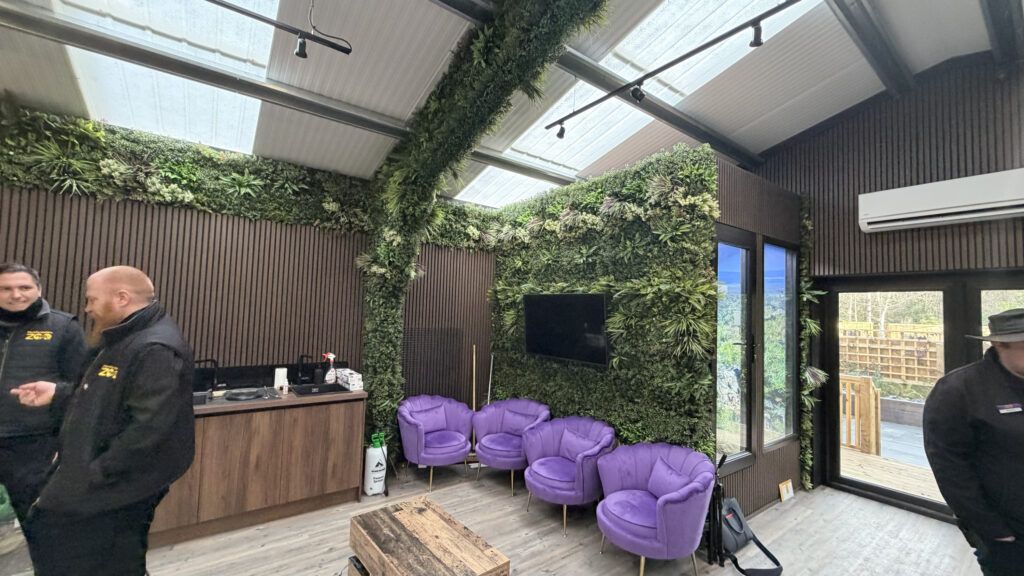
Formerly known as Paradise Park, Hertfordshire Zoo is a well-loved, family-run attraction with a strong focus on education, conservation and memorable visitor experiences. When their team got in touch about plans for a new VIP animal Meet and Greet space, known as the Discovery Studio, we knew this was a project we would genuinely enjoy being part of.
This blog takes you behind the scenes of that creative journey, from early ideas and moodboards through to CGI visualisation, and why projects like this highlight the value of working with a creative partner who understands both design and delivery.
A creative brief rooted in experience
The brief from Hertfordshire Zoo was clear but exciting. They wanted a flexible, engaging space that could support VIP animal encounters, educational sessions and small group experiences, while still feeling welcoming, practical and easy to adapt.
The Discovery Studio needed to work for a wide audience. Families, schools, private visitors and staff would all use the space in different ways. That meant the design had to balance atmosphere with functionality, and creativity with realism.
At Datum, our approach always starts with understanding how a space will actually be used. We do not design for the sake of it. We design to solve problems, improve experiences and make life easier for the teams who will use the space every day.
Stage 1: Creative moodboards and direction setting
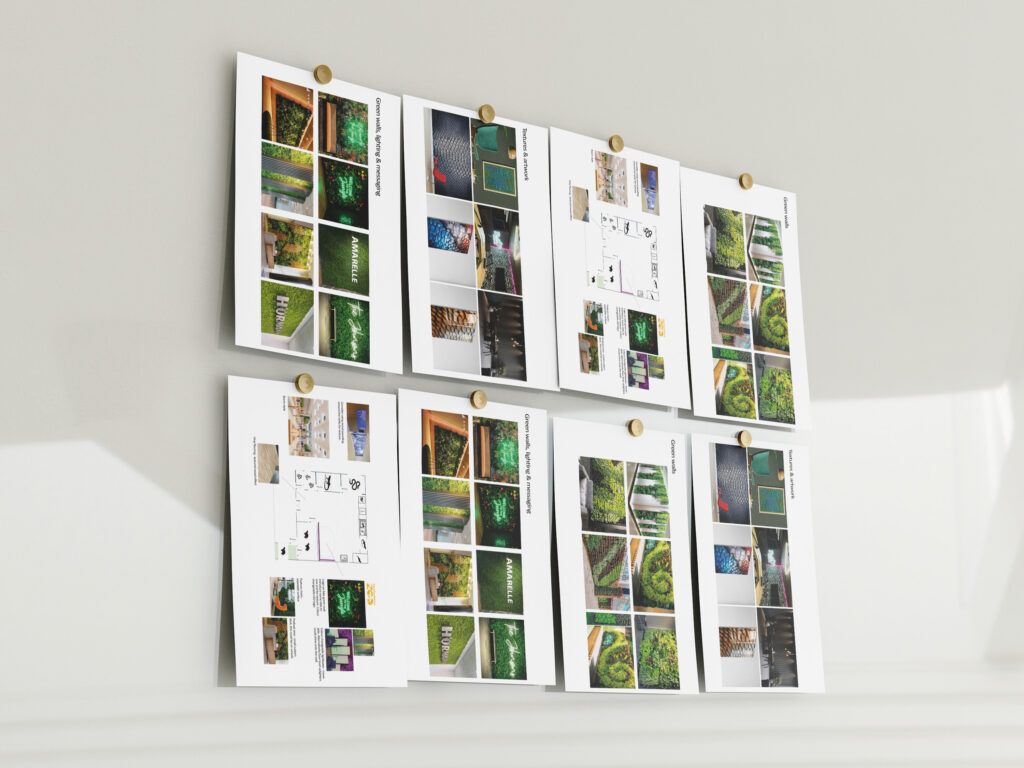
The first stage of the project focused on creative exploration. This is where moodboards come into their own.
What is a moodboard?
A moodboard is a visual tool used to explore look, feel and direction before committing to a final design. It brings together colours, materials, imagery, textures and references to spark discussion and align everyone early on.
For Hertfordshire Zoo, we developed two distinct creative routes. Each route explored a different atmosphere and approach to the Discovery Studio, while keeping practical considerations front and centre.
Our moodboards included:
- Colour palettes inspired by nature and the zoo environment
- Material ideas that would be durable, easy to clean and family-friendly
- Layout suggestions to support animal handling, visitor flow and staff movement
- Early ideas for subtle technology and interactive elements
These concepts were shared in a clear, annotated PDF, followed by a discussion to gather feedback. This stage is deliberately collaborative. It allows clients to react, refine and shape the direction before any detailed visuals are produced.
The benefit to the client at this point is clarity. Decisions are easier when everyone can see and respond to ideas visually, rather than imagining them from words alone.
Stage 2: CGI visualisation bringing ideas to life
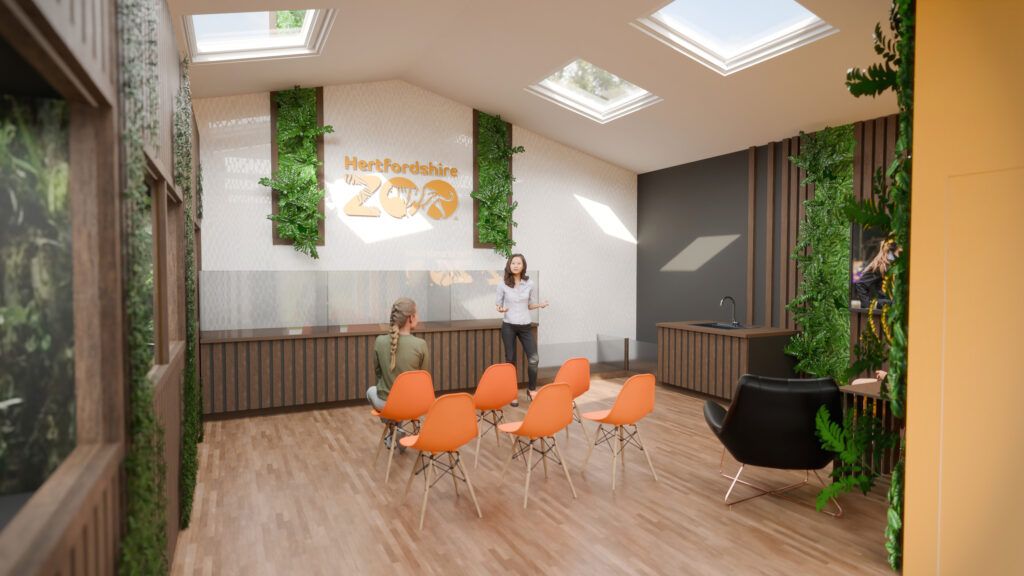
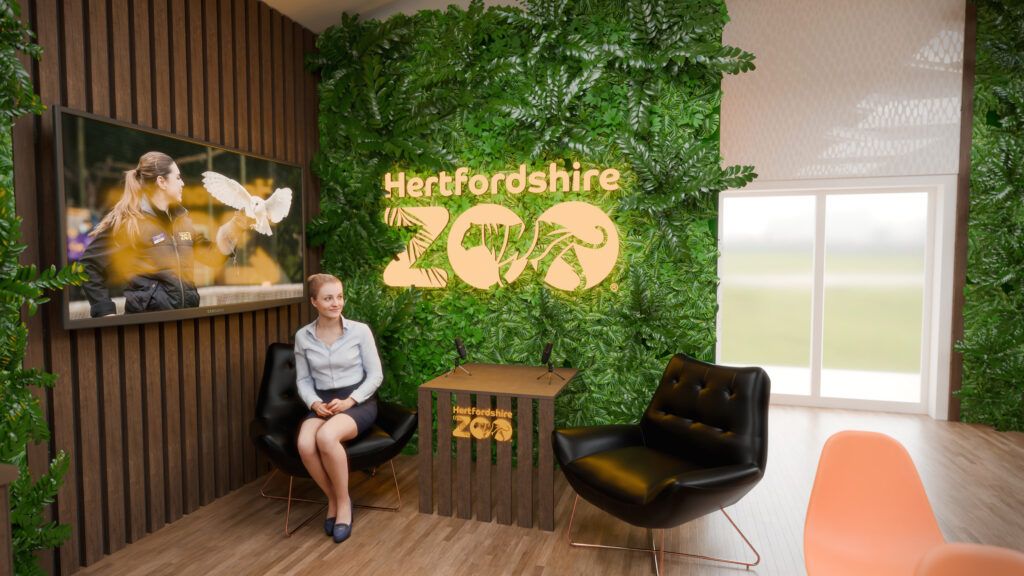
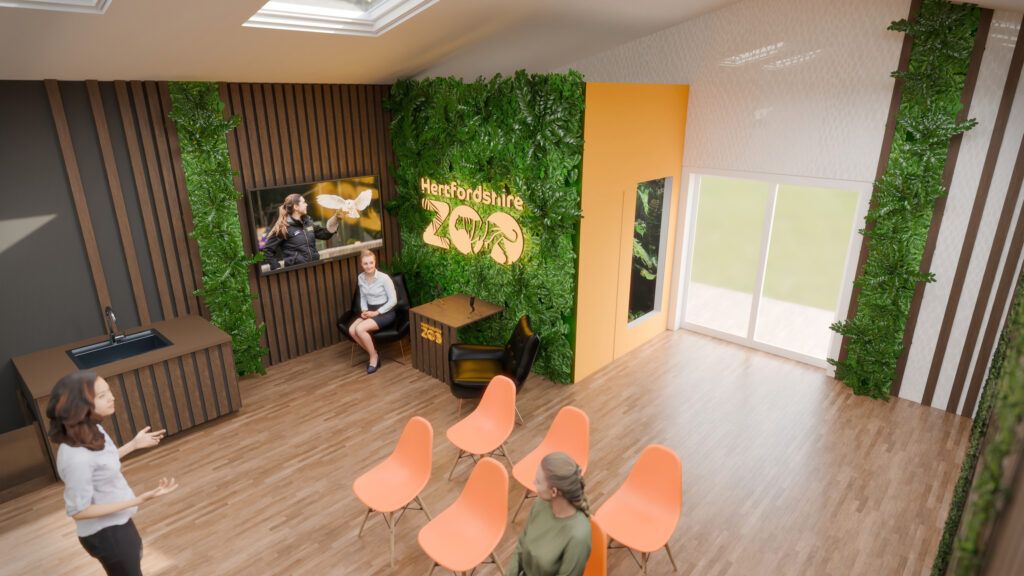
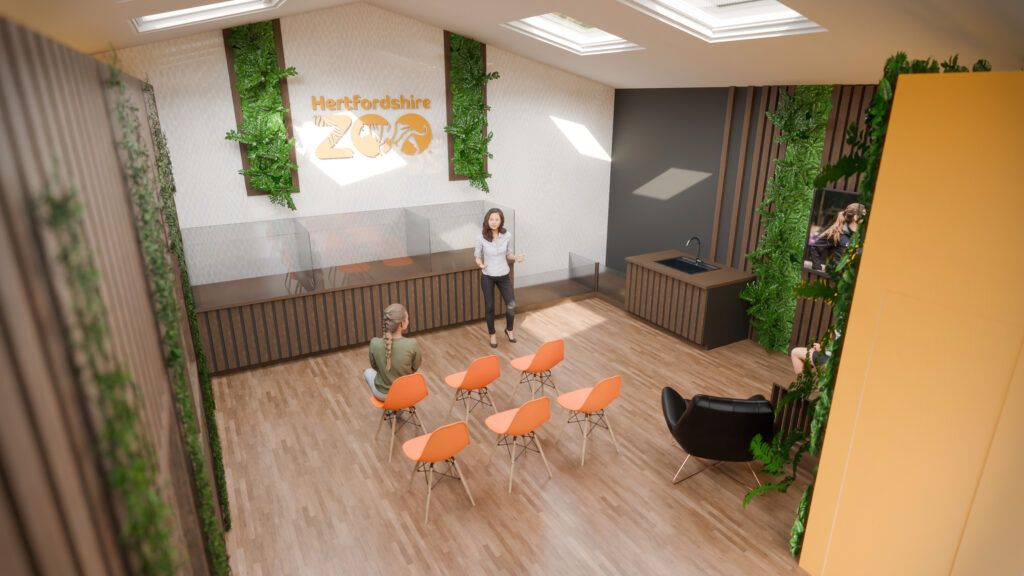
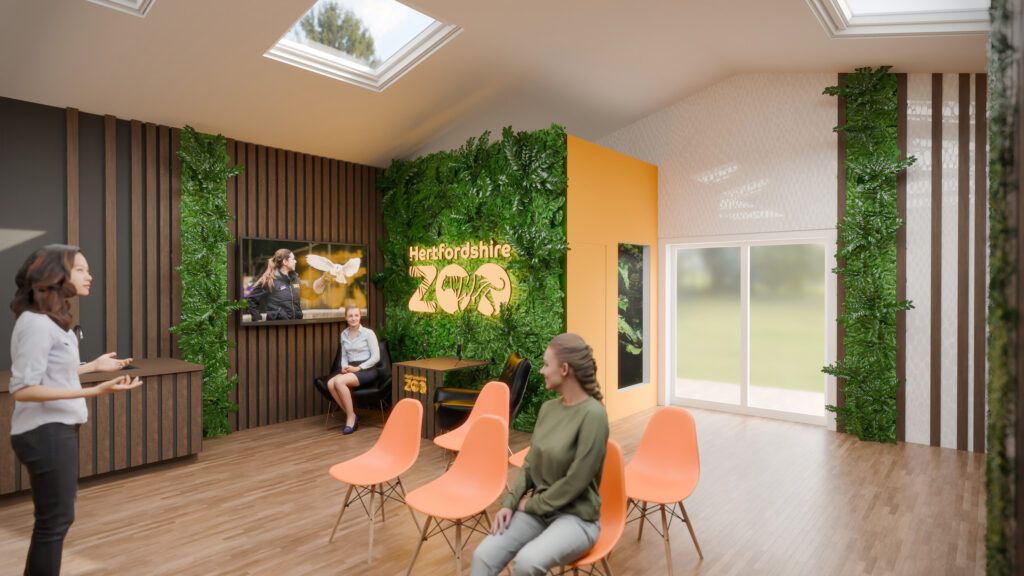
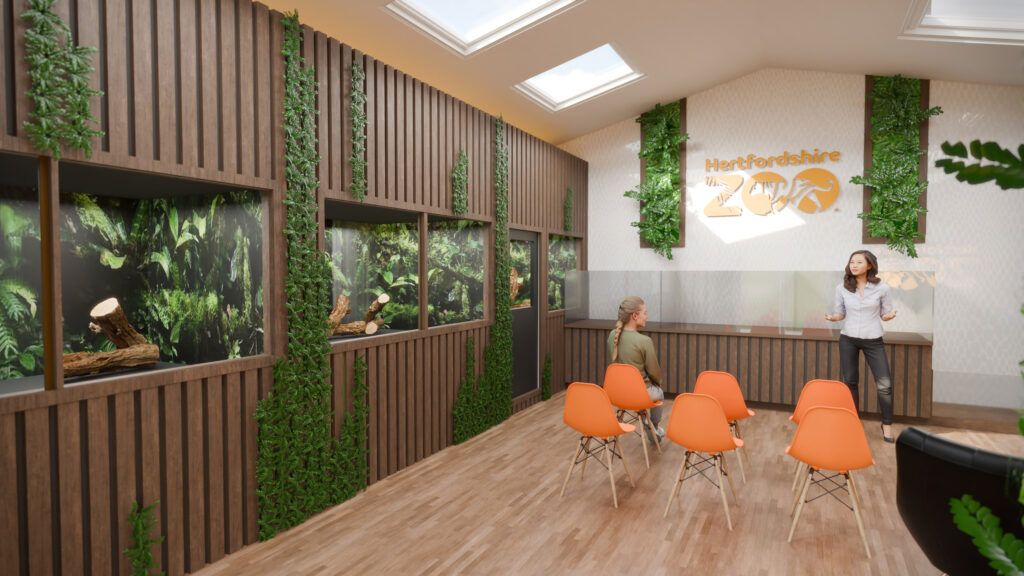
Once a creative route is agreed, CGI visualisation can take the project to the next level.
What is CGI in design?
CGI, or computer-generated imagery, is used to create realistic visual representations of a space before it is built or fitted out. It helps stakeholders understand scale, layout and atmosphere, and supports confident decision-making.
For the Discovery Studio, the CGI visuals helped Hertfordshire Zoo:
- Visualise how the space would feel for visitors
- Assess layout and furniture placement
- Review wall treatments, finishes and signage ideas
- Share the concept internally with clarity and confidence
CGI is particularly valuable for spaces that will host the public. It reduces uncertainty, highlights potential issues early and keeps projects moving smoothly.
A project we genuinely enjoyed
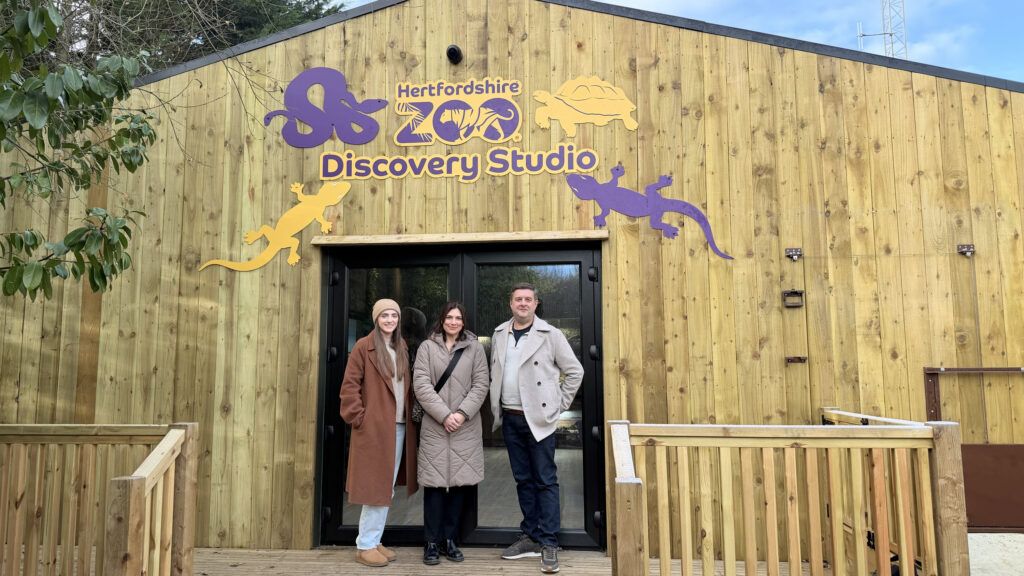
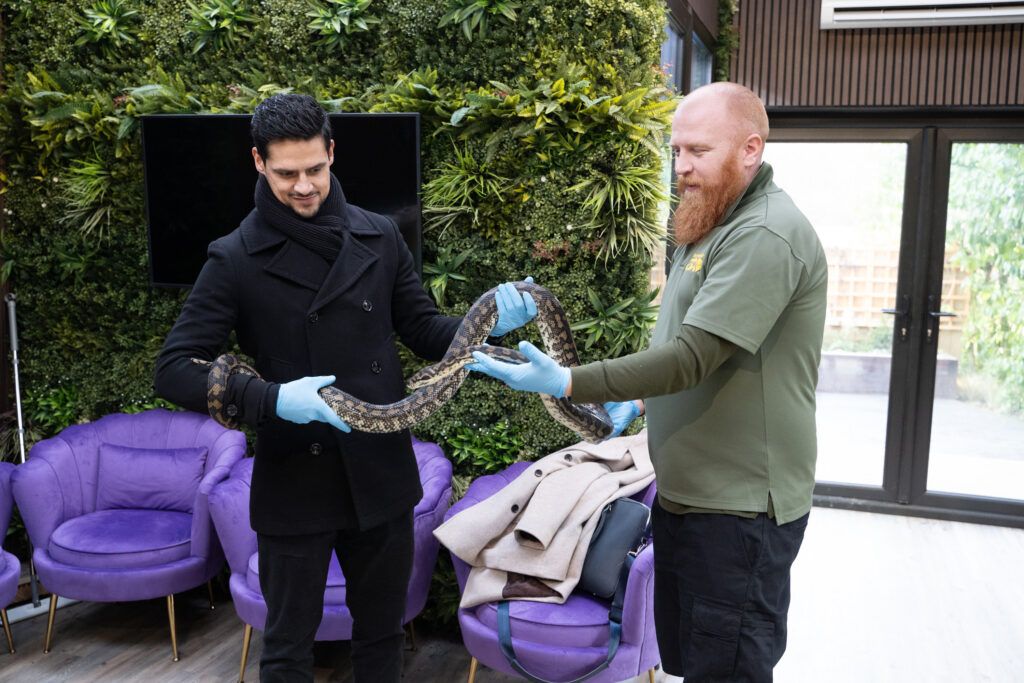
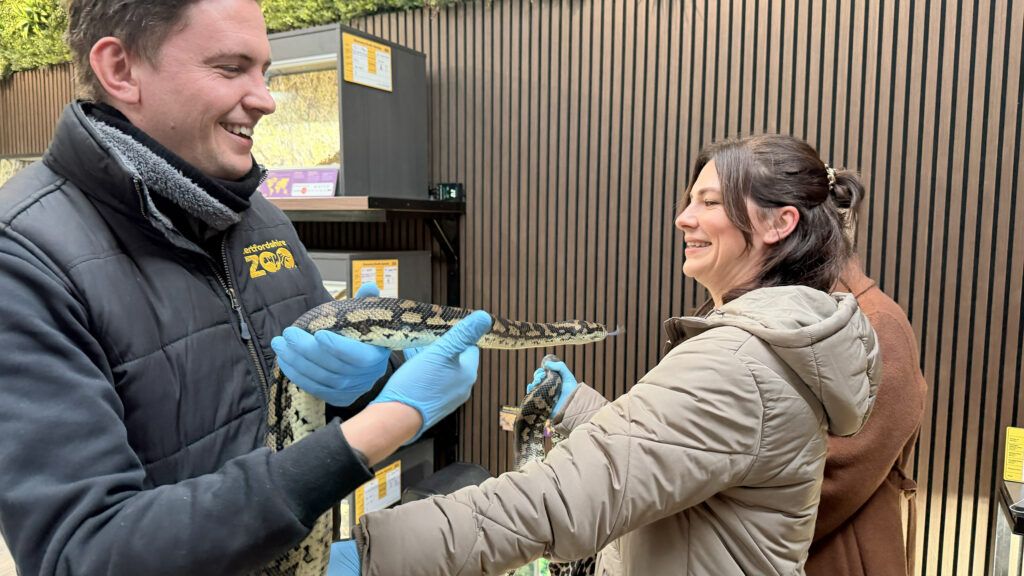
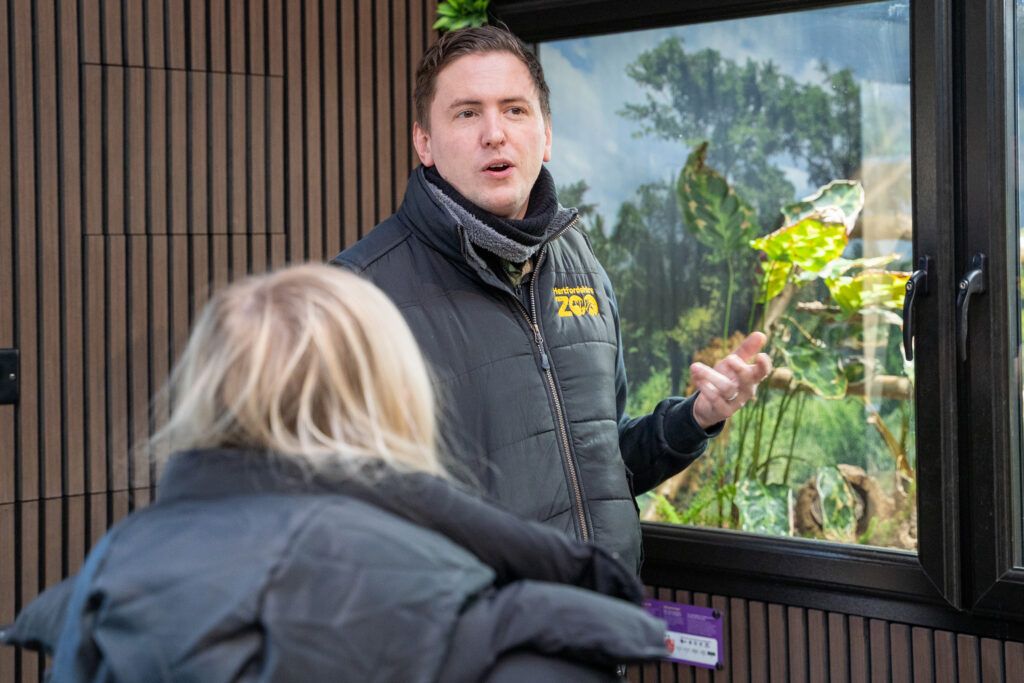
One of the highlights for our team was visiting the zoo in person. During our recent visit, we were lucky enough to be shown around by Aaron Whitnall, Operations Coordinator at Hertfordshire Zoo, who gave us a private tour of the site.
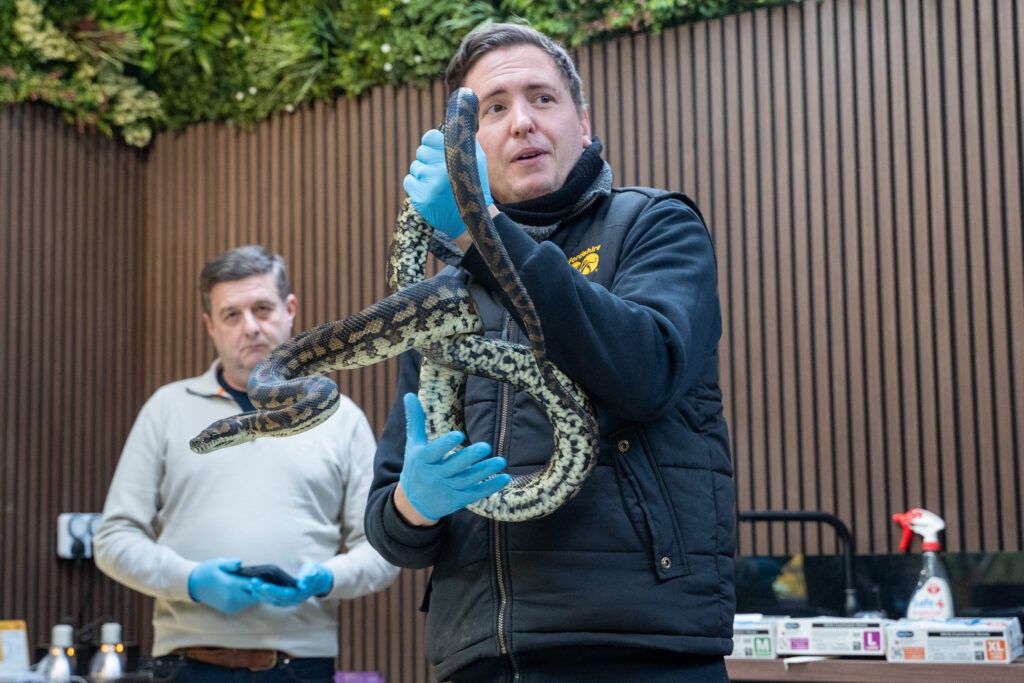
Seeing the animals, understanding the behind-the-scenes operations and experiencing the zoo from a staff perspective added real depth to our work. It reinforced why context matters so much in design. When you understand the environment, the people and the purpose, the creative work becomes stronger and more relevant.
It also reminded us why we enjoy projects like this so much. They are collaborative, creative and rooted in real-world use.
Why this approach works for clients
Projects like the Discovery Studio demonstrate how Datum works as a creative partner, not just a supplier.
Our approach in simple steps
- Listen first: Understand the brief, the audience and the practical constraints
- Explore creatively: Use moodboards to test ideas without commitment
- Visualise clearly: Bring concepts to life with CGI when needed
- Refine collaboratively: Adjust designs based on real feedback
- Support decisions: Provide visuals and thinking that make sign-off easier
This structured but flexible process is rooted in the principles set out in the Datum Playbook. It ensures consistency, quality and clarity across every project, while still leaving room for creativity.
The value for clients is confidence. You know what you are getting, why decisions are being made, and how the final outcome will support your goals.
Who this is useful for
If you are responsible for:
- Visitor attractions
- Educational spaces
- Zoos, museums or public venues
- Experience-led environments
Working with a creative partner like Datum can help you move from ideas to decisions more efficiently. You gain clear visuals, honest advice and a team that understands both creativity and practical delivery.
Frequently asked questions
How long does the moodboard stage usually take?
Typically, initial concepts are shared within five working days from project go-ahead. This allows ideas to be explored quickly without slowing momentum.
Do we have to move on to CGI after moodboards?
No. CGI is optional and only recommended if it adds value. Some projects are resolved entirely at moodboard stage, depending on needs and budgets.
Yes. CGI visuals are ideal for internal presentations, approvals and discussions. They help align teams and speed up decision-making.
What makes Datum different as a creative partner?
We combine creative thinking with real-world experience across creative, print and digital. That means designs are not only visually engaging but also practical to deliver and maintain.
Audience takeaway
By working with Datum, clients gain more than visuals. They gain a structured, collaborative process that reduces uncertainty, saves time and leads to better decisions. Whether you are planning a new space or refreshing an existing one, our approach helps turn ideas into confident outcomes.